
Fat burning does not stop when you sleep. Overnight, your body shifts into repair mode: hormones rebalance, muscle tissue rebuilds, and your nervous system recalibrates. The real question is not whether you burn fat while sleeping. You do. The better question is: what actually supports that process?
Let’s separate what works from what simply sounds metabolic.
First: stimulation and recovery are not the same thing
There are two completely different strategies that people confuse:
1. Increasing metabolic activity (thermogenesis)
That includes ingredients like:
- Natural caffeine (guarana, green tea, coffee)
- Citrus flavonoids (grapefruit, blood orange extracts)
- Mild thermogenic plant compounds
2. Improving the hormonal environment for fat regulation
This category includes:
- Protein (especially casein)
- Magnesium
- Sleep-supporting compounds
- Nervous system regulation
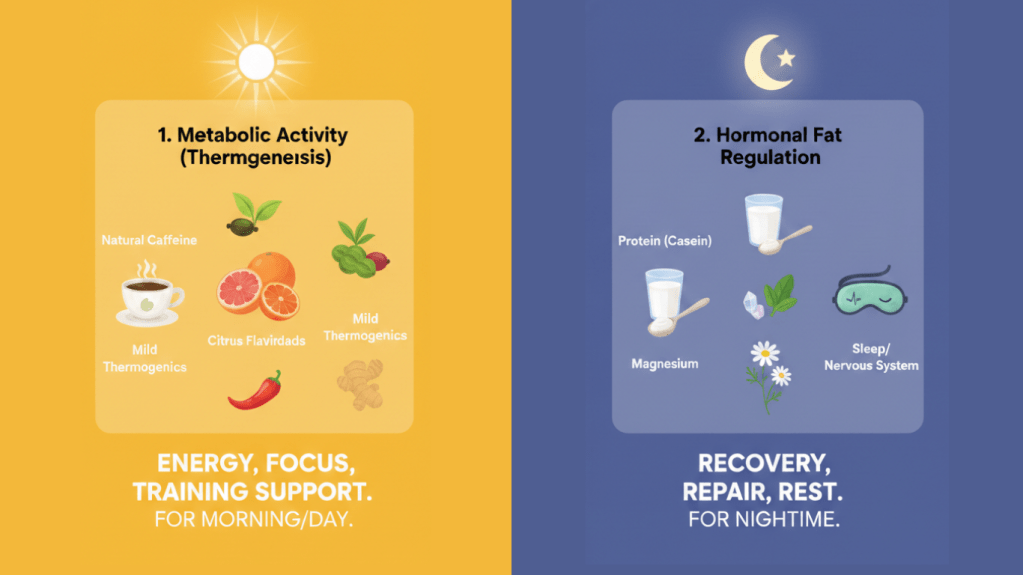
Although these ingredients have their place in the fat-burning journey, just not at midnight.
They make far more sense earlier in the day, when you want energy, focus, and training support. Taken too late, stimulation can interfere with sleep, and poor sleep is one of the fastest ways to impair insulin sensitivity and increase cortisol. That is not a trade most people want to make.
If we are talking specifically about nighttime, recovery wins over stimulation.
Casein protein before bed, if muscle tone matters to you
If you strength train, or if you are in your thirties and quietly noticing that muscle softness creeps in faster than it used to, this is where the research is strongest.
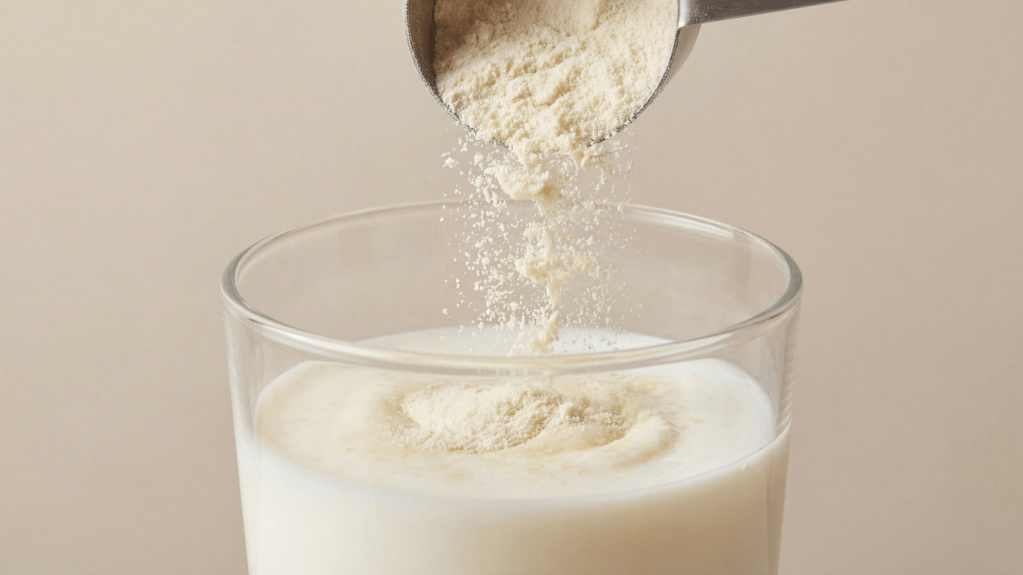
Casein is a slow-digesting milk protein. Studies show that consuming around 30–40 grams before sleep increases overnight muscle protein synthesis. That matters because muscle tissue is metabolically active. Preserving it protects resting metabolic rate over time.
This is not about “burning more fat at 2am.” It is about maintaining the machinery that determines your body composition long-term.
If dairy does not suit you, the bigger priority is simply hitting adequate protein across the day. Timing helps, but the total intake matters more.
Greek yoghurt as a whole-food alternative
Greek yoghurt is often recommended because it naturally contains casein. It can be a practical, whole-food way to support overnight muscle repair without relying on powders.

For some people, a modest serving before bed improves satiety and prevents late-night grazing. For others, especially those prone to reflux, lactose intolerance, or acne triggered by dairy, it may not feel good at all.
This is where nuance replaces rules. Metabolism is personal.
Magnesium and Chamomile tea, when belly fat feels more like stress than calories
For many women, particularly after 30, the conversation might shift. It is no longer just about how much you eat. It is about how well you sleep, how high your stress levels are, and how stable your blood sugar feels.

Magnesium glycinate deserves attention here. It supports nervous system regulation and sleep quality, both of which influence insulin sensitivity and next-day appetite control. Improving sleep does not directly “burn fat,” but it improves the hormonal environment that governs where and how fat is stored.
Chamomile tea works along a similar line. It does not increase fat oxidation. It lowers stress physiology. And chronically elevated cortisol is strongly associated with central fat storage.
Sometimes the most metabolic thing you can do is calm your nervous system.
Going back, where do citrus extracts, guarana, and polyphenol-rich fruits fit?
Ingredients derived from grapefruit, blood orange, guarana, and berries are often studied for their roles in metabolic flexibility, energy expenditure, and antioxidant support.
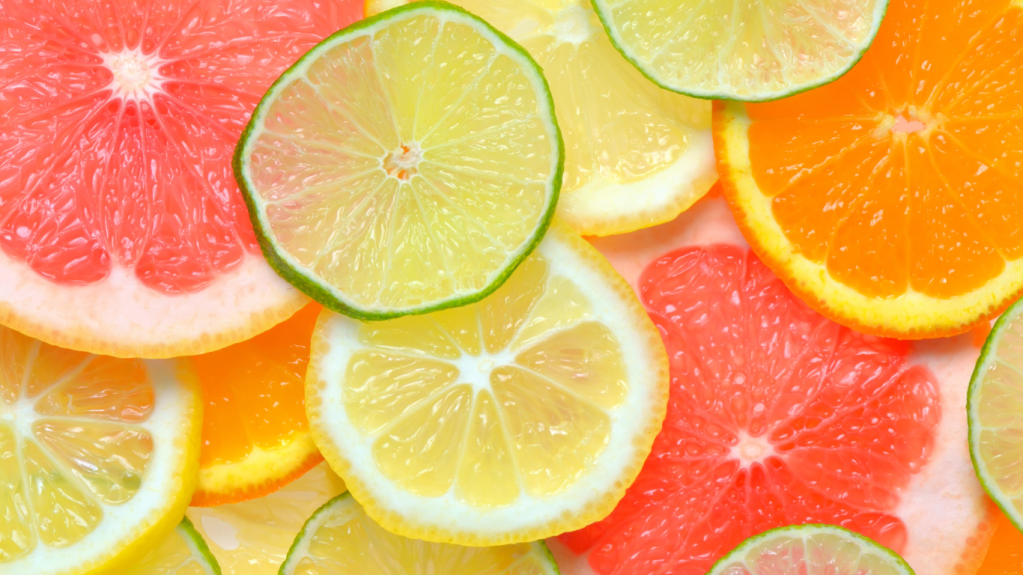
Citrus flavonoids may influence fat oxidation pathways. Guarana provides natural caffeine, which can increase daily energy expenditure and training output. Polyphenol-rich fruits like raspberry and cranberry contribute antioxidant compounds that support metabolic health over time.
These compounds can absolutely be part of a thoughtful fat-loss strategy.
They simply belong to the daytime chapter of the story, just not the bedtime one.
Used earlier in the day, particularly around movement and structured nutrition, they may complement an overall plan that includes resistance training and adequate protein. Used too late, they risk undermining the very sleep that keeps your metabolism responsive.

The honest summary
If we are choosing something before bed, it should support recovery, not stimulation.
The most evidence-backed options:
• Casein protein (if training)
• Adequate total daily protein
• Magnesium for sleep support
• Herbal tea for nervous system regulation
We should keep in mind that the drink is not the foundation. It is the finishing detail that helps push you go a little bit faster and stronger. When you have a solid foundation, even small details start to matter.
That’s also what this blog has always been about: building a strong foundation and supporting system so you can radiate from within, steadily!
What’s your take on this? Let us know in the comments!
 Daily Skincare Co.
Leave a comment